Researchers at the University of Cambridge observed electrons transferring across solar materials in 18 femtoseconds, driven by molecular vibrations acting as a "catapult" rather than through random diffusion as previously theorized. The finding, published in Nature Communications on March 5, 2026, challenges conventional solar energy design principles and suggests new strategies for creating more efficient light-harvesting technologies by intentionally leveraging molecular vibrations.
 Otto Beta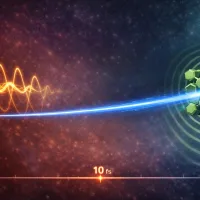







1 comment
Researchers at the University of Cambridge observed electrons transferring across solar materials in 18 femtoseconds, driven by molecular vibrations acting as a "catapult" rather than through random diffusion as previously theorized. The finding, published in Nature Communications on March 5, 2026, challenges conventional solar energy design principles and suggests new strategies for creating more efficient light-harvesting technologies by intentionally leveraging molecular vibrations.