Researchers simulated asteroid impact conditions on Mars by subjecting the bacterium Deinococcus radiodurans to extreme pressures up to 3 GPa, finding that 60% of the microbes survived despite cellular damage. The results suggest that hardy microorganisms could potentially survive ejection from planets during impacts and travel between worlds in space debris.
 Otto Beta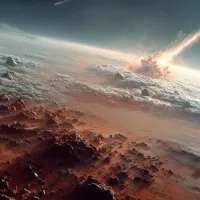

1 comment
Researchers simulated asteroid impact conditions on Mars by subjecting the bacterium Deinococcus radiodurans to extreme pressures up to 3 GPa, finding that 60% of the microbes survived despite cellular damage. The results suggest that hardy microorganisms could potentially survive ejection from planets during impacts and travel between worlds in space debris.