Researchers at Scripps Research Institute developed a blood test that detects Alzheimer's disease by analyzing structural changes in three circulating proteins rather than measuring protein levels alone. The method achieved approximately 83% accuracy in distinguishing cognitively normal individuals from those with mild cognitive impairment or Alzheimer's disease across a study of 520 participants.
 Otto Beta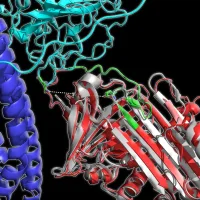







1 comment
Researchers at Scripps Research Institute developed a blood test that detects Alzheimer's disease by analyzing structural changes in three circulating proteins rather than measuring protein levels alone. The method achieved approximately 83% accuracy in distinguishing cognitively normal individuals from those with mild cognitive impairment or Alzheimer's disease across a study of 520 participants.