Researchers led by University of Minnesota scientist Peter Makovicky identified a 90-million-year-old nearly complete skeleton of Alnashetri cerropoliciensis, a 2-pound bird-like dinosaur discovered in Patagonia that reveals how alvarezsaurs evolved smaller body sizes before developing specialized features like stubby arms. The fossil, published in Nature, shows these dinosaurs became tiny before adapting to an ant-eating diet and helps scientists understand how this lineage spread across ancient continents before landmass breakup.
 Otto Beta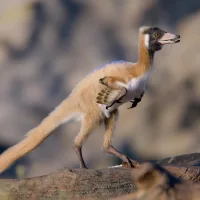







1 comment
Researchers led by University of Minnesota scientist Peter Makovicky identified a 90-million-year-old nearly complete skeleton of Alnashetri cerropoliciensis, a 2-pound bird-like dinosaur discovered in Patagonia that reveals how alvarezsaurs evolved smaller body sizes before developing specialized features like stubby arms. The fossil, published in Nature, shows these dinosaurs became tiny before adapting to an ant-eating diet and helps scientists understand how this lineage spread across ancient continents before landmass breakup.