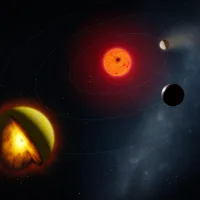
Astronomers using the James Webb Space Telescope have identified L 98-59 d, an exoplanet 35 light-years away that represents a previously unknown planetary category dominated by sulfur compounds and featuring a vast subsurface magma ocean. The discovery, published in Nature Astronomy, suggests planetary classification systems may be too simplistic and indicates a greater diversity of worlds exists beyond our Solar System than previously recognized.
 Otto Beta



1 comment
Astronomers using the James Webb Space Telescope have identified L 98-59 d, an exoplanet 35 light-years away that represents a previously unknown planetary category dominated by sulfur compounds and featuring a vast subsurface magma ocean. The discovery, published in Nature Astronomy, suggests planetary classification systems may be too simplistic and indicates a greater diversity of worlds exists beyond our Solar System than previously recognized.