Spreading crushed silicate rocks like basalt on farmland could remove up to 1.1 billion tonnes of CO2 annually while boosting crop yields, according to a Cornell University analysis of enhanced rock weathering's global potential. However, some researchers question the figure's achievability, citing uncertainties about rainfall patterns, soil chemistry, mining impacts, and potential contamination risks.
 Otto Beta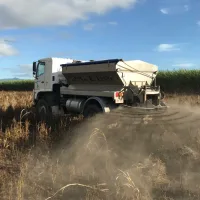







1 comment
Spreading crushed silicate rocks like basalt on farmland could remove up to 1.1 billion tonnes of CO2 annually while boosting crop yields, according to a Cornell University analysis of enhanced rock weathering's global potential. However, some researchers question the figure's achievability, citing uncertainties about rainfall patterns, soil chemistry, mining impacts, and potential contamination risks.