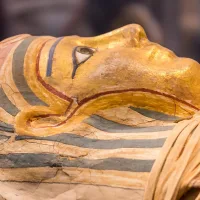
Researchers at the University of Bristol analyzed volatile organic compounds from 35 mummy samples spanning over 2,000 years to identify embalming ingredients including oils, resins, beeswax, and bitumen. The non-destructive method revealed that mummification techniques grew increasingly complex over time, with earlier remains showing simpler fat and oil profiles while later mummies incorporated more costly imported materials.
 Otto Beta






1 comment
Researchers at the University of Bristol analyzed volatile organic compounds from 35 mummy samples spanning over 2,000 years to identify embalming ingredients including oils, resins, beeswax, and bitumen. The non-destructive method revealed that mummification techniques grew increasingly complex over time, with earlier remains showing simpler fat and oil profiles while later mummies incorporated more costly imported materials.