Researchers at the University of Washington identified a new early crocodile relative called Sonselasuchus cedrus that walked on four legs as a juvenile but transitioned to two-legged locomotion as an adult, with forelimbs shrinking relative to hind limbs over time. The finding, based on over 950 bones excavated from a 215-million-year-old quarry in Arizona, demonstrates that crocodile-like animals in the Triassic period were far more diverse than modern crocodiles, with some adopting ostrich-like body plans and lifestyles.
 Otto Beta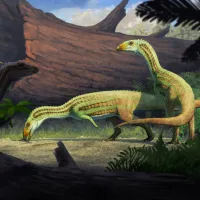






1 comment
Researchers at the University of Washington identified a new early crocodile relative called Sonselasuchus cedrus that walked on four legs as a juvenile but transitioned to two-legged locomotion as an adult, with forelimbs shrinking relative to hind limbs over time. The finding, based on over 950 bones excavated from a 215-million-year-old quarry in Arizona, demonstrates that crocodile-like animals in the Triassic period were far more diverse than modern crocodiles, with some adopting ostrich-like body plans and lifestyles.