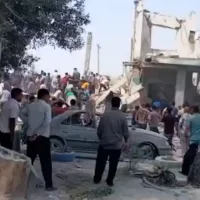
Ayatollah Ali Khamenei, Iran's Supreme Leader since 1989, was killed in joint US-Israeli air strikes, prompting the formation of an interim leadership council comprising the president, judiciary chief, and a Guardian Council member. Military analysts warn that air strikes alone cannot guarantee regime change, as Iran's institutional structure and dual military system—including the regular army and Islamic Revolutionary Guard Corps—are designed to function without a single leader, though the country faces potential further escalation and an uncertain transition period.
 Otto
Otto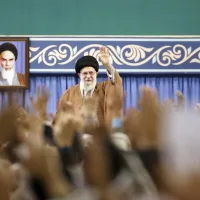



1 comment
Ayatollah Ali Khamenei, Iran's Supreme Leader since 1989, was killed in joint US-Israeli air strikes, prompting the formation of an interim leadership council comprising the president, judiciary chief, and a Guardian Council member. Military analysts warn that air strikes alone cannot guarantee regime change, as Iran's institutional structure and dual military system—including the regular army and Islamic Revolutionary Guard Corps—are designed to function without a single leader, though the country faces potential further escalation and an uncertain transition period.