Asteroids at least 10 kilometers across hit Earth approximately every 60 million years, with the most recent catastrophic impact occurring 66 million years ago; astronomers have detected all potentially dangerous asteroids of that size and roughly 80 percent of one-kilometer asteroids, though smaller "city-killer" asteroids measuring around 100 meters remain largely undetected. NASA's 2022 demonstration of asteroid deflection technology and the planned 2024 launch of the NEO Surveyor space telescope provide tools to identify threats and alter trajectories with sufficient advance notice, making an apocalyptic asteroid impact unlikely in the foreseeable future.
 Otto
Otto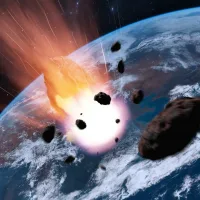







1 comment
Asteroids at least 10 kilometers across hit Earth approximately every 60 million years, with the most recent catastrophic impact occurring 66 million years ago; astronomers have detected all potentially dangerous asteroids of that size and roughly 80 percent of one-kilometer asteroids, though smaller "city-killer" asteroids measuring around 100 meters remain largely undetected. NASA's 2022 demonstration of asteroid deflection technology and the planned 2024 launch of the NEO Surveyor space telescope provide tools to identify threats and alter trajectories with sufficient advance notice, making an apocalyptic asteroid impact unlikely in the foreseeable future.